Juicing Recipes for Bloating: Natural Relief Through Fresh Ingredients
Table of Contents
When you buy through links on our site, we may earn an affiliate commission at no additional cost to you (learn more)
Bloating can leave you feeling uncomfortable and searching for natural relief. While there’s no magic cure, certain juicing recipes may help reduce bloating by supporting digestion and reducing water retention.
Fresh juices made with ingredients like ginger, cucumber, and pineapple can provide digestive enzymes and anti-inflammatory compounds that may ease bloating symptoms. These combinations work by helping your body process food more efficiently and reducing gas buildup in your digestive tract.
This guide walks you through the science behind juicing for bloating relief and provides practical recipes you can make at home. You’ll learn which ingredients to use, how to prepare your juices properly, and how to incorporate them into your routine for the best results.
How Juicing Can Help With Bloating
Fresh juices deliver concentrated nutrients and natural enzymes that support digestive function while providing hydration to help reduce water retention. Certain fruits and vegetables contain compounds that actively combat gas, inflammation, and sluggish digestion.
Understanding the Causes of Bloating
Bloating occurs when excess gas builds up in your digestive tract or when your body retains water. Common triggers include eating too quickly, consuming high-sodium foods, food intolerances, and constipation.
Your digestive system may struggle to break down certain carbohydrates, particularly FODMAPs, which ferment in your gut and produce gas. Hormonal fluctuations, especially in women, can also lead to temporary bloating.
Dehydration paradoxically causes your body to hold onto water, creating a bloated feeling. Insufficient fiber intake slows digestive transit time, allowing gas to accumulate.
Benefits of Fresh Juice for Digestion
Fresh juices provide immediate hydration that helps flush excess sodium from your system and reduces water retention. The liquid form allows nutrients to enter your bloodstream quickly without requiring intensive digestive work.
Natural enzymes in raw fruits and vegetables aid in breaking down food particles more efficiently. Papaya contains papain, while pineapple offers bromelain—both are protein-digesting enzymes that ease digestive burden.
The high water content in fresh juice helps soften stool and promote regular bowel movements. Anti-inflammatory compounds like gingerol in ginger and curcumin in turmeric can soothe intestinal irritation.
Certain juices act as natural diuretics, encouraging your kidneys to release excess fluids. This effect is particularly noticeable with cucumber, celery, and watermelon-based juices.
Key Ingredients in Anti-Bloating Juices
Ginger stands out as the most effective anti-bloating ingredient, containing compounds that relax intestinal muscles and expel gas. Use fresh ginger root in amounts of 1-2 inches per serving.
Cucumber consists of 95% water and contains quercetin, an antioxidant that reduces swelling. It acts as a natural diuretic without depleting essential minerals.
Pineapple provides bromelain, which breaks down proteins and reduces inflammation in your digestive tract. Fresh pineapple offers significantly more enzyme activity than canned versions.
Other powerful ingredients include:
Fennel: Contains anethole, which relaxes digestive spasms
Mint: Calms stomach muscles and reduces gas production
Celery: High in water and potassium to balance sodium levels
Lemon: Stimulates digestive juices and supports liver function
Papaya: Delivers papain enzyme for protein digestion
Best Juicing Recipes for Bloating Relief
Certain juice combinations target bloating through ingredients that support digestion, reduce gas, and calm inflammation in the digestive tract. The recipes below use specific produce known for anti-bloating properties.
Green Juice Recipes for Reducing Bloating
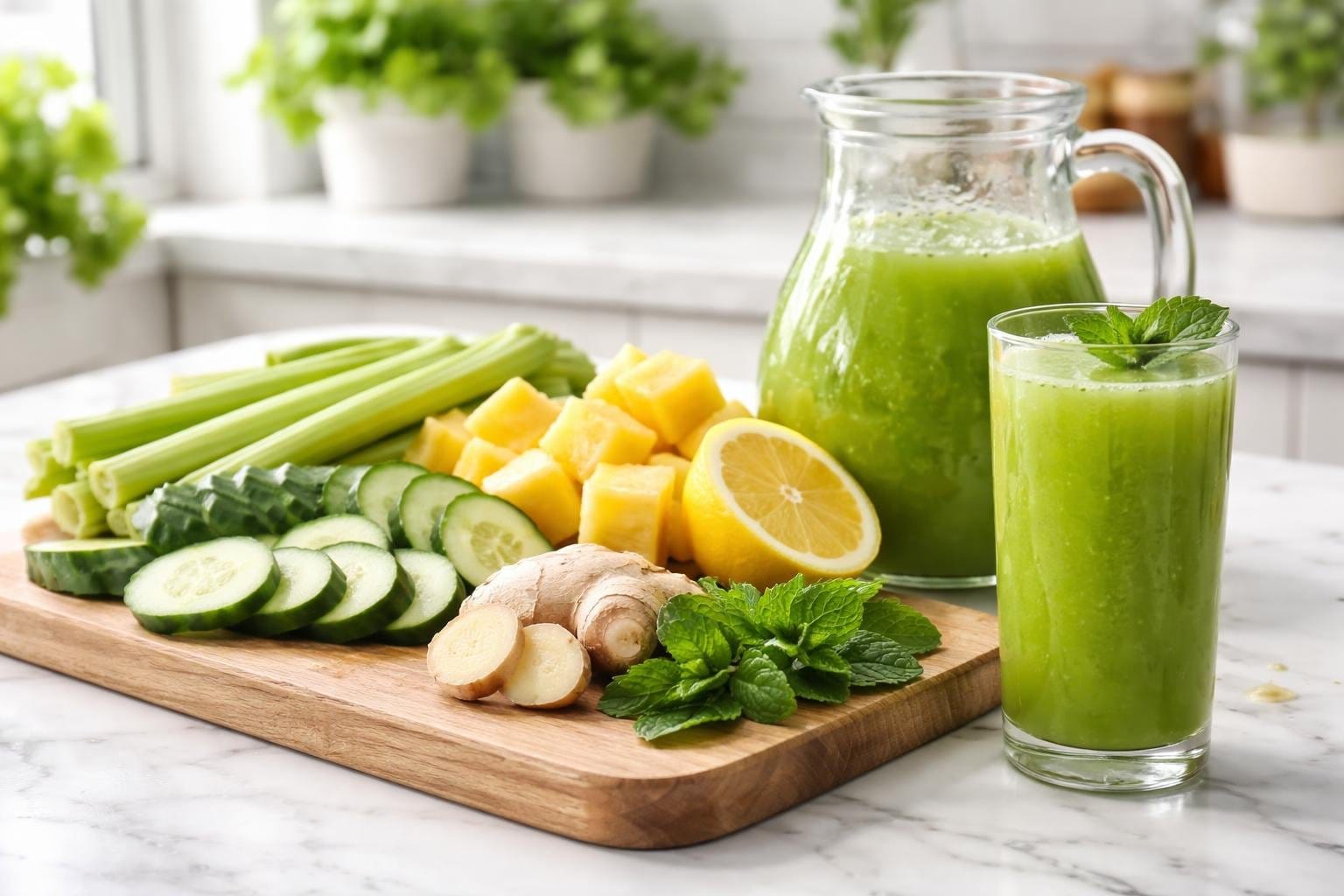
A simple cucumber-celery-ginger combination works effectively for bloating relief. Blend 1 large cucumber, 3 celery stalks, 1-inch piece of fresh ginger, and half a lemon.
For a nutrient-dense option, combine 2 cups spinach, 1 cucumber, 1 green apple, half a lemon, and 1-inch ginger root. Spinach offers magnesium which relaxes digestive muscles.
Add fresh mint to any green juice for additional relief. A recipe with 1 cucumber, 4 celery stalks, 1 green apple, 10 mint leaves, and half a lime reduces gas formation. Mint contains menthol that soothes stomach muscles and reduces bloating symptoms.
Low-FODMAP juices avoid ingredients that ferment in your gut and cause gas. Stick with carrots, cucumbers, oranges, and ginger as your base ingredients.
Try mixing 3 medium carrots, 1 orange (peeled), 1 cucumber, and 1-inch ginger. Carrots provide beta-carotene without triggering fermentation. Another option combines 2 cups spinach, 1 cucumber, 1 orange, and fresh turmeric root.
Low-FODMAP Juice Ingredients:
Safe: cucumber, carrot, orange, ginger, spinach, bell pepper
Keep portions to 8-12 ounces per serving. Drinking smaller amounts prevents overwhelming your digestive system.
Smooth Juice Recipes With Gut-Friendly Ingredients
Fennel acts as a natural anti-spasmodic for your digestive tract. Juice 1 fennel bulb, 2 celery stalks, 1 cucumber, and half a lemon for targeted bloating relief.
Papaya contains the enzyme papain which breaks down proteins and aids digestion. Combine 1 cup papaya chunks, 1 cucumber, 1-inch ginger, and lime juice. This tropical blend works particularly well after protein-heavy meals.
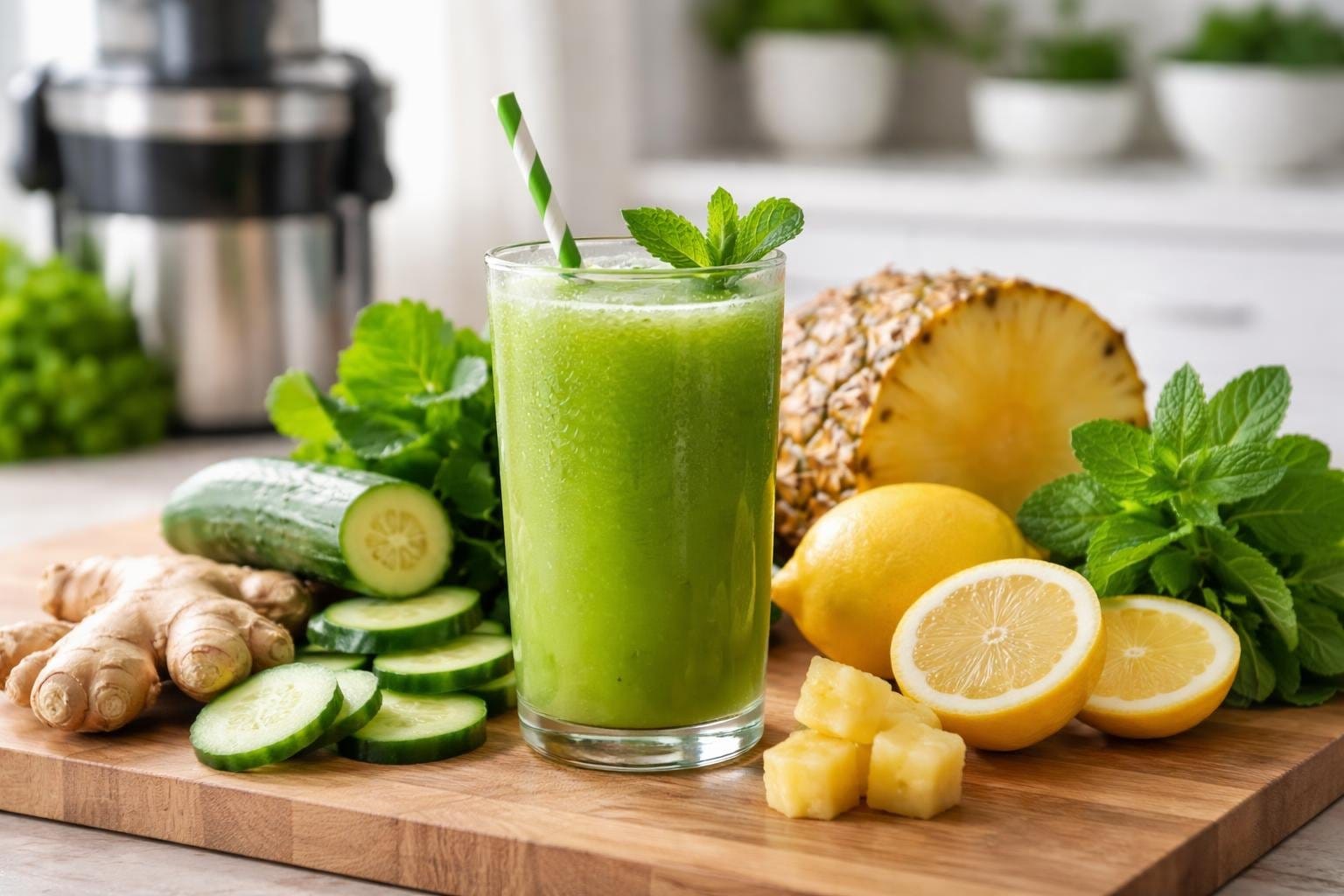
A pineapple-based recipe uses bromelain enzymes to reduce inflammation. Mix 1 cup fresh pineapple, 2 celery stalks, 1 cucumber, and fresh mint leaves. Drink this juice 30 minutes before meals for best results.
Tips for Making and Using Juices Effectively
Timing your juice consumption and proper storage techniques directly impact how well these drinks combat bloating. Small preparation errors can reduce the anti-inflammatory compounds and digestive enzymes that make these juices effective.
When to Drink Anti-Bloating Juices
Drinking anti-bloating juices on an empty stomach maximizes their digestive benefits. Your body absorbs the nutrients and enzymes more efficiently when you consume them 15-30 minutes before meals.
Morning consumption works best for most people because your digestive system is primed for nutrient absorption after fasting overnight.
You can also drink these juices between meals when you feel bloating symptoms starting. Wait at least two hours after eating to avoid diluting your stomach acid during active digestion.
Avoid drinking large amounts of juice with meals, as the extra liquid can interfere with proper digestion and worsen bloating.
Common Mistakes to Avoid
Using too much high-sugar fruit creates an imbalanced juice that can ferment in your gut and increase bloating. Stick to a 2:1 ratio of vegetables to fruit for optimal results.
Gulping juice quickly introduces excess air into your digestive system. Sip slowly and consider “chewing” the juice to mix it with saliva, which contains digestive enzymes.
Key mistakes that reduce effectiveness:
Juicing and storing for more than 24 hours
Skipping produce washing, which leaves pesticide residues
Removing all pulp and fiber, which aids digestion
Adding ice that dilutes beneficial compounds
Using oxidized produce with brown spots
Combining too many ingredients at once can overwhelm your digestive system. Start with simple 3-4 ingredient recipes before experimenting with complex blends.
How to Store Fresh Juices for Maximum Benefits
Fresh juice loses nutritional value within minutes of exposure to air and light. If you need to store juice, use airtight glass containers filled to the top to minimize oxygen exposure. Dark glass bottles work better than clear ones because they protect light-sensitive nutrients like vitamin C.
Refrigerate stored juice at 35-40°F and consume within 12-24 hours. Add a squeeze of lemon juice to slow oxidation and preserve color.
Freezing juice preserves some nutrients for up to three months, though you’ll lose active enzymes. Pour juice into ice cube trays or freezer-safe jars, leaving space for expansion.