Essential Oils for Fruit Flies- Deter Pests Naturally
When you buy through links on our site, we may earn an affiliate commission at no additional cost to you (learn more)
While the summer months may bring warm weather and plenty of sunshine, it also brings some annoying pests, including fruit flies. If these tiny insects plague your home, you will love hearing about natural yet practical solutions for keeping fruit flies at bay.
Commercial traps and chemicals can help you get rid of fruit flies, but you may not want to bring these into your house, especially if you have children or pets. Below are science-backed strategies for using essential oils to reduce fruit fly activity without harsh chemicals.
What Are Fruit Flies?
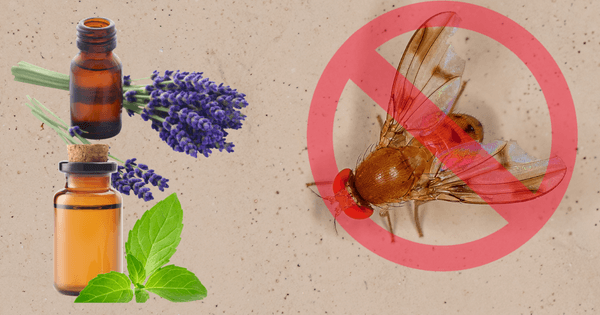
Drosophila melanogaster, the common fruit fly, often arrives as tiny larvae on produce or through open windows. They are attracted to fermenting organic matter and breed quickly in moist environments like drains, trash bins, and overripe fruit.
Adult fruit flies live about a week, but a single female can lay hundreds of eggs, so small infestations can grow fast. Targeting the places they feed and breed is the most effective way to control them.
How Essential Oils Work on Fruit Flies
Essential oils contain volatile compounds such as terpenes and aldehydes. These small molecules evaporate into the air and can interfere with insect olfaction, the sense insects use to find food and mates.
Studies suggest some essential oil vapors can repel flies, reduce egg viability, or act as toxicants at higher concentrations. Results vary by species, oil type, and exposure time, so practical application matters.
The Best Oils to Use
Below are oils with evidence or traditional use against flies and other household pests. Use language like “studies suggest” because effects depend on conditions.
Peppermint Oil
Peppermint contains menthol and other volatiles that studies suggest are toxic to some fly life stages and can repel adults. One lab study reported high mortality in eggs and larvae exposed to peppermint volatiles.
Peppermint also leaves a strong scent that masks fermenting odors, making it harder for fruit flies to locate food sources.
Lavender Oil
Lavender contains linalool and linalyl acetate. Multiple studies indicate lavender can repel mosquitoes and other flies, and it is commonly used when people want a pleasant-smelling deterrent.
Lemongrass Oil
Lemongrass oil is rich in citral and geraniol. Research shows lemongrass has insect-repellent and antimicrobial properties, and it has been used in commercial repellents.
Tea Tree Oil — Use with Caution
Tea tree oil contains terpinen-4-ol and other terpenes. Some studies show it can attract certain fruit fly species at short range and even increase mating behavior, so it is not recommended for general fruit fly control.
Essential Oil Blends That Work
Blends can combine repellency and pleasant scent while targeting multiple behaviors. Use distilled or high-quality oils for best results.
- Blend A (general deterrent): equal parts basil, eucalyptus, and peppermint.
- Blend B (fresh-smelling, broad): equal parts lavender, peppermint, clove, and camphor.
- Single-oil option: peppermint oil on its own is often effective for short-term control.
These mixes can help mask food odors and create an environment less attractive to fruit flies. Keep the original peppermint product link preserved: peppermint essential oil.
How to Use Essential Oils
There are safe, practical ways to apply oils that reduce fruit fly numbers and discourage re-infestation.
- Diffuser: add a few drops of one oil or a blend to a room diffuser and place near the problem area. Run intermittently rather than continuously to conserve oil and lower exposure.
- Spray: combine 10 drops of essential oil with 4 cups (about 1 liter) of water in a spray bottle. Shake before use and mist surfaces where fruit flies gather. For a stronger option, replace water with 70% isopropyl alcohol, but test on surfaces first.
- Drain freshening: place 2–4 drops directly in the drain, run water, and operate the disposal briefly to disperse scent through plumbing.
- Spot treatment: put a few drops on a cotton ball or dish sponge and tuck it near fruit bowls, trash cans, or drains.
Combine these oil methods with basic sanitation for best results: remove overripe fruit, empty trash regularly, clean drains, and rinse bottles before storing.
Safety Precautions
Essential oils are concentrated plant extracts and should be used with care. Keep oils away from children and pets, and never apply undiluted oil to skin or pets without veterinary guidance.
Some oils can irritate skin or mucous membranes. If you make a spray with alcohol, avoid using it near open flames and do not spray directly on food or food-preparation surfaces.
If anyone in the home has asthma or chemical sensitivities, test a small area first and monitor for breathing changes. Stop use if irritation, headache, or allergic symptoms occur.
Store oils in a cool, dark place in tightly closed containers. Dispose of oily rags safely to prevent spontaneous combustion.
Practical Tips and Troubleshooting
If flies return within a few days, combine scent deterrents with mechanical traps. A simple homemade trap mixes apple cider vinegar with a few drops of dish soap in a bowl; the soap reduces surface tension so flies sink.
Rotate oils occasionally; pests can habituate to a single scent over time. Pair oil use with strict sanitation to interrupt the breeding cycle and prevent reinfestation.
For persistent or large infestations, consider professional pest control, especially if larvae are breeding in hidden drains or wall voids.
You might also like: Tea Tree Oil Mosquito Repellent