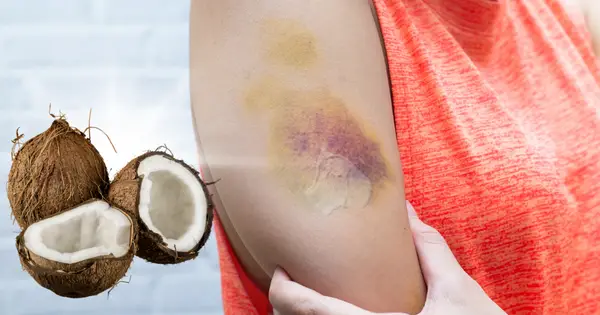
Coconut Oil For Bruises
When you buy through links on our site, we may earn an affiliate commission at no additional cost to you (learn more)
When you bruise your face, arms, or other visible skin you may want that injury to heal as quickly as possible. Bruises are common and usually harmless, but they can leave behind dark, unsightly marks that make people self-conscious. You may already have an effective home remedy in your kitchen: coconut oil. Let’s explore how it helps, how to use it safely, and when to see a doctor.
Understanding bruises
A bruise forms when a blood vessel under the skin is damaged and blood leaks into the surrounding tissue. The trapped blood causes the familiar dark spot that changes color as the body breaks it down and absorbs it. Bruises often result from blunt-force trauma such as bumps, falls, or pressure.
Some people bruise more easily due to thinner skin, certain medications, or medical conditions that affect clotting. Most bruises heal on their own within two weeks, but gentle care can reduce pain and speed recovery.
Why coconut oil can help
Coconut oil contains medium-chain fatty acids, including lauric acid, and has been studied for its anti-inflammatory and skin-barrier supporting effects. Studies suggest topical plant oils can reduce inflammation and help restore the skin barrier, which supports the healing process when applied correctly (source).
Research in animals also shows that virgin coconut oil may improve antioxidant status and promote wound healing, which provides a plausible mechanism for supporting bruise recovery (source).
Coconut oil is also a good moisturizer and absorbs relatively quickly, which makes it a comfortable carrier for gentle massage or for diluting essential oils when used as part of a topical preparation.
How to use coconut oil for a bruise
Use these simple, practical steps to apply coconut oil safely and effectively.
- Clean the area: Gently wash the skin with mild soap and water and pat dry.
- Apply a small amount: Warm a fingertip-sized amount of virgin coconut oil between your palms until it liquefies, then apply a thin layer over the bruise.
- Gentle massage: If the bruise is not painful to touch, lightly massage the area toward the heart for 1–2 minutes to encourage lymphatic drainage. Stop if it causes pain.
- Repeat 2–3 times daily: Reapply coconut oil and repeat the gentle massage a few times each day until the bruise fades.
If you prefer, combine coconut oil with supportive ingredients such as vitamin C (topical serums or vitamin C–rich creams) or turmeric. Use only small amounts and patch-test first. Do not apply undiluted essential oils directly to the skin; mix them into a carrier like coconut oil at safe dilutions.
Simple massage technique
- Use light pressure—enough to move the skin but not to cause pain.
- Move in slow, short strokes toward the nearest lymph nodes (for example, toward the armpit for an arm bruise).
- Limit sessions to 1–2 minutes per area to avoid irritation.
Safety and precautions
Always check for signs that a bruise needs medical attention. Seek care if you notice increasing pain, spreading redness, numbness, pins-and-needles, or if the bruise is unusually large after a minor bump.
Also see a healthcare professional if bruises appear without known injury, recur frequently, or you have a history of bleeding disorders or take blood-thinning medications.
Do a patch test before using coconut oil on broken or sensitive skin. Apply a small amount on an area of healthy skin and wait 24 hours to check for irritation or allergic reaction.
What to expect and timeline
Most bruises change color over days from dark blue or purple to green, yellow, and then pale as the body reabsorbs the blood. With gentle care and topical coconut oil, some people notice reduced swelling and improved skin feel, which can make the area look better as it heals.
If a bruise does not show signs of gradual improvement within two weeks, or if symptoms worsen, seek medical evaluation to rule out deeper injury or an underlying condition.
Conclusion
Coconut oil is a low-cost, accessible topical option that can support bruise care through moisturization, mild anti-inflammatory effects, and as a comfortable carrier for gentle massage. Use virgin coconut oil, apply it gently, and monitor the area for any signs of infection or worsening symptoms.
For persistent, severe, or unexplained bruising consult a healthcare professional for further evaluation.
Sources