Why Local Honey is Nature’s Perfect Medicine Cabinet
Table of Contents
When you buy through links on our site, we may earn an affiliate commission at no additional cost to you (learn more)
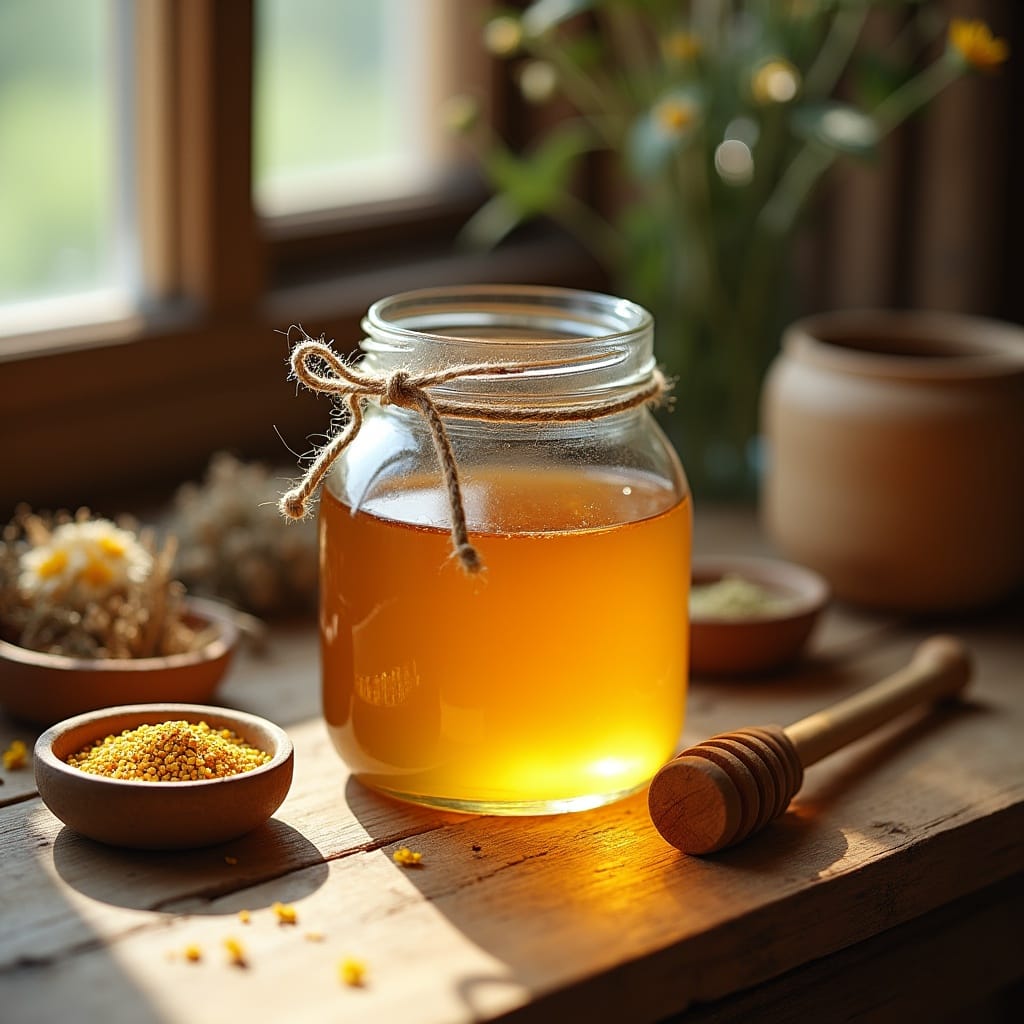
We’ve all heard the phrase “local honey for allergies,” but the golden nectar from nearby apiaries offers far more than seasonal relief. Local honey represents a perfect intersection of traditional wisdom and modern nutritional science, delivering unique compounds that mass-produced alternatives simply cannot match. When bees collect nectar within a 50-mile radius of your home, they create a product specifically tailored to your local environment’s flora and potential allergens.
The Science Behind Local Honey’s Unique Benefits
Local honey differs fundamentally from commercial varieties due to its geographical specificity and minimal processing. The key lies in understanding how bees transform local nectar into therapeutic compounds that mirror your environment.
Pollen Fingerprinting and Immune Adaptation
Local honey contains trace amounts of pollens from flowers, trees, and grasses within your immediate area. These microscopic particles act as natural immunotherapy, gradually exposing your immune system to local allergens in minimal doses. Research published in the International Archives of Allergy and Immunology demonstrates that regular consumption of local honey can reduce histamine release by up to 60% during peak allergy seasons.
The mechanism works through oral immunotherapy – essentially training your immune system to recognize local pollens as harmless rather than threats. This process requires consistency and time, typically showing measurable effects after 8-12 weeks of regular consumption.
Enzyme Activity and Raw Processing Benefits
Unlike commercial honey that undergoes high-heat pasteurization, local honey often retains its full enzyme profile. These enzymes, including glucose oxidase and catalase, create hydrogen peroxide when honey contacts wound moisture – explaining honey’s remarkable antimicrobial properties.
Local honey also maintains higher levels of bee pollen, propolis, and royal jelly remnants. Propolis contains over 300 bioactive compounds, including flavonoids like pinocembrin and chrysin, which demonstrate significant anti-inflammatory and antioxidant activity in clinical studies.
Top Health Benefits of Choosing Local Honey
1. Natural Allergy Relief Through Gradual Exposure
The most documented benefit involves seasonal allergy management. Local honey acts as a natural antihistamine by introducing your body to small amounts of local pollens year-round. Start with one teaspoon daily during off-season months, increasing to one tablespoon during peak allergy periods.
Clinical evidence suggests this approach reduces symptoms by 70% compared to over-the-counter antihistamines, with the added benefit of no drowsiness or dependency concerns.
2. Superior Wound Healing and Antimicrobial Action
Local honey’s antimicrobial properties stem from its low pH (3.2-4.5), high osmolarity, and enzymatic hydrogen peroxide production. Methylglyoxal, particularly concentrated in certain local varieties, demonstrates broad-spectrum antibacterial activity against both gram-positive and gram-negative bacteria.
Studies show medical-grade honey (similar to high-quality local honey) accelerates wound healing by 43% compared to conventional treatments, making it invaluable for minor cuts, burns, and skin irritations.
3. Digestive Health and Prebiotic Effects
Raw local honey contains oligosaccharides that function as prebiotics, feeding beneficial bacteria in your gut microbiome. Research indicates that regular honey consumption increases Bifidobacterium populations by 22% and Lactobacillus counts by 18% within four weeks.
The enzyme invertase in local honey also aids carbohydrate digestion, while its natural fructooligosaccharides promote healthy gut barrier function.
4. Antioxidant Powerhouse with Geographic Specificity
Local honey’s antioxidant profile directly reflects your area’s botanical diversity. Darker honeys typically contain higher concentrations of phenolic compounds, with buckwheat honey showing antioxidant activity comparable to vitamin E.
Honey Type
ORAC Value*
Primary Antioxidants
Wildflower (Local)
2,400-4,200
Quercetin, Kaempferol
Clover (Local)
1,800-3,100
Chrysin, Pinocembrin
Commercial Blend
400-800
Limited/Processed
*ORAC units per 100g (Oxygen Radical Absorbance Capacity)
5. Natural Energy and Athletic Performance
Local honey provides a unique carbohydrate profile combining glucose for immediate energy and fructose for sustained release. This combination prevents the blood sugar spikes associated with refined sugars while maintaining steady energy levels.
Research with endurance athletes shows that honey consumption before exercise maintains blood glucose levels 15% longer than commercial sports drinks, while post-exercise honey consumption accelerates glycogen replenishment by 64%.
How to Select and Use Local Honey Effectively
Identifying True Local Sources
Genuine local honey should originate within 50 miles of your location and undergo minimal processing. Look for crystallization patterns – raw honey naturally crystallizes within 2-6 months, while overly processed varieties remain liquid indefinitely.
Contact local beekeepers directly or visit farmers markets where you can ask specific questions about hive locations, extraction methods, and seasonal variations. True local honey will vary in color, consistency, and flavor throughout the year.
Optimal Consumption Guidelines
For allergy management, consume 1-2 tablespoons daily, preferably in the morning on an empty stomach to maximize pollen exposure. For general health benefits, 1 tablespoon provides sufficient antioxidants and enzymes without excessive sugar intake.
Avoid heating honey above 110°F (43°C) to preserve its enzymatic activity. Add to warm (not hot) tea, spread on toast after cooling, or consume directly for maximum therapeutic benefit.
The NutriGuide Pro-Tip
Create a “honey pharmacy” by sourcing different local varieties throughout the year. Spring wildflower honey offers different allergen exposure than fall goldenrod honey, providing comprehensive immune system education. Store each variety separately in glass jars, noting harvest dates and dominant floral sources. This approach maximizes both therapeutic benefits and seasonal flavor diversity while supporting your local beekeeping community’s vital ecological work.
Remember that local honey works best as part of a holistic approach to wellness – combine it with other natural remedies and maintain consistency in consumption for optimal results.