Shatavari for Women: The Ancient Herb for Modern Wellness
Table of Contents
When you buy through links on our site, we may earn an affiliate commission at no additional cost to you (learn more)
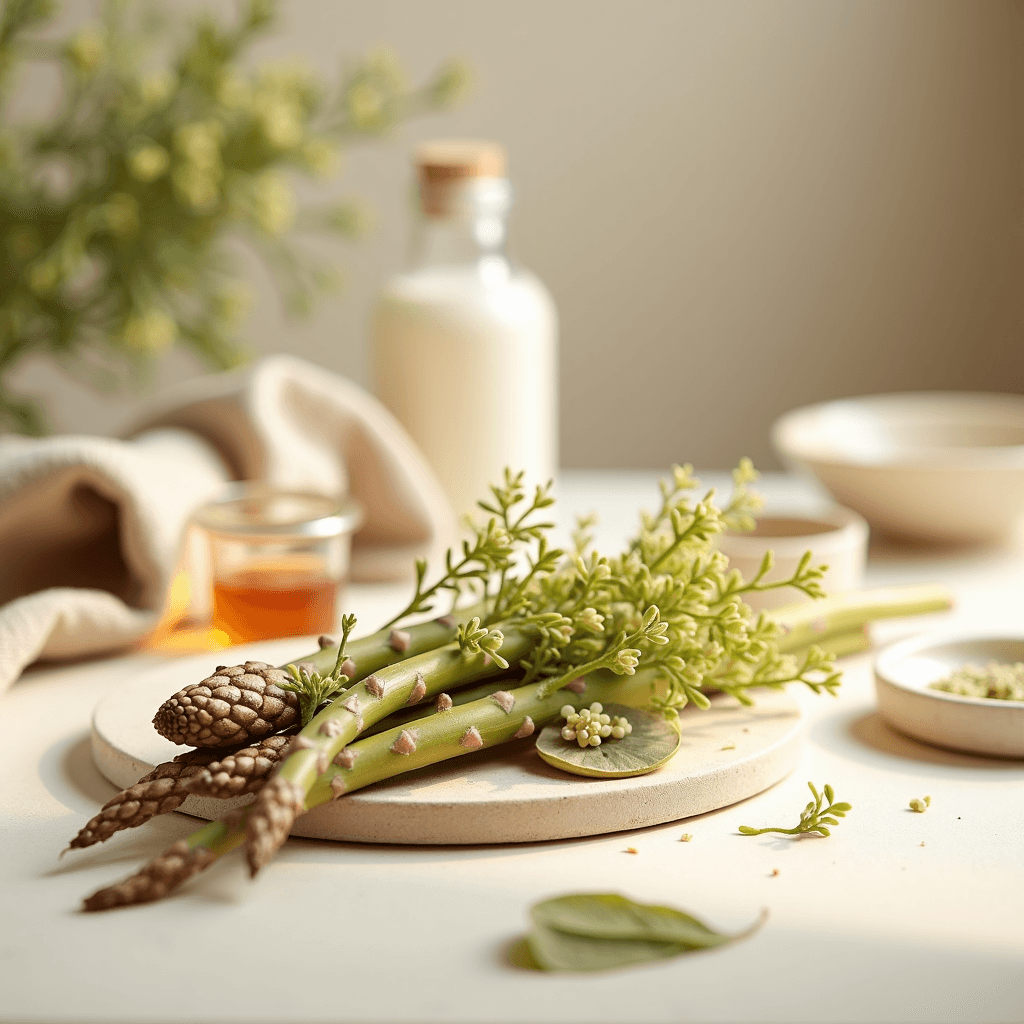
For thousands of years, Ayurvedic practitioners have turned to shatavari—a delicate, fern-like herb native to India—as a cornerstone of women’s health support. The name itself tells the story: “shatavari” translates to “she who has a hundred husbands,” reflecting the herb’s legendary ability to nourish and support women’s vitality across all life stages. Today, modern research is catching up to ancient wisdom, validating what traditional healers have always known about this remarkable plant.
The Science Behind Shatavari’s Power
Shatavari (Asparagus racemosus) works through a sophisticated symphony of bioactive compounds that interact with your body’s natural systems. The herb contains steroidal saponins—compounds that mimic hormonal messengers in your body—which help regulate estrogen and progesterone levels without introducing synthetic hormones. These saponins don’t force your hormones up or down; instead, they support your body’s own ability to maintain balance.
The herb is also rich in mucilage, a gel-like substance that soothes and nourishes the reproductive tract’s delicate tissues. This cooling, yin-nourishing quality is why Ayurveda classifies shatavari as uniquely suited to women’s physiology. Research published in the Journal of Ayurveda and Integrative Medicine shows that shatavari’s polysaccharides stimulate immune function while simultaneously calming inflammation—a dual action that makes it particularly valuable during hormonal transitions.
Shatavari Across Women’s Life Stages
Reproductive Years & Menstrual Balance
During reproductive years, shatavari helps support natural hormonal rhythms and a healthy menstrual cycle. The herb’s saponins encourage your body to produce adequate levels of estrogen and progesterone, which means smoother cycles and potentially reduced PMS symptoms like mood swings and cramping. Women who use shatavari often report feeling more emotionally grounded throughout their cycle.
The herb also supports cervical fluid production—the body’s own natural mechanism for fertility—making it a traditional choice for women trying to conceive. Its nutritive properties help build what Ayurveda calls “ojas,” the vital essence that supports reproductive health and overall vitality.
Pregnancy & Postpartum Support
Shatavari earned its reputation as a “rasayana” (rejuvenative) herb during pregnancy. It nourishes the mother’s tissues, supports healthy blood production during pregnancy, and prepares the body for postpartum recovery. After birth, shatavari traditionally supports healthy lactation—the herb increases prolactin, the hormone responsible for milk production, while its nutritive qualities help restore the mother’s depleted reserves.
Many postpartum women use shatavari in ghee-based preparations to rebuild strength and vitality after the profound physical demands of pregnancy and birth.
Perimenopause & Menopause
Perhaps shatavari’s most celebrated role is supporting women through perimenopause and menopause. As estrogen naturally declines, the herb’s phytoestrogens—plant compounds that weakly mimic estrogen—provide gentle support without the risks associated with synthetic hormone replacement. Studies show that women taking shatavari experience reduced hot flashes, improved sleep quality, and more stable mood throughout this transition.
Unlike stronger phytoestrogens that might overstimulate tissue, shatavari’s saponins work with your body’s innate wisdom. They don’t force hormonal levels; they support your body’s natural adaptation to hormonal change. This is why it’s particularly valuable for women who want to navigate menopause naturally.
Mix 1/2 to 1 teaspoon of shatavari powder with warm milk (dairy or plant-based) and a touch of honey. This “shatavari milk” is the classic preparation in Ayurveda and is traditionally taken in the morning or evening. The warm medium helps your body absorb the herb’s compounds while the milk’s fat-soluble components enhance nutrient assimilation.
Capsules & Supplements
For convenience, standardized capsules containing 500-1000mg of shatavari extract are widely available. These are helpful for travel or busy schedules, though traditionalists argue that the whole plant powder retains more of the herb’s subtle energetic properties. Start with one capsule daily and adjust based on your response.
Ghee-Based Preparations
In Ayurvedic practice, shatavari is often infused into ghee—clarified butter—for enhanced absorption and deeper tissue nourishment. This is particularly valued postpartum and during menopause. The fat in ghee carries the herb’s fat-soluble compounds directly to reproductive tissues.
Herbal Decoction
Simmer 1 tablespoon of dried shatavari root in 2 cups of water for 10-15 minutes, strain, and drink. This method extracts more of the mucilage compounds that soothe and nourish tissues. Adding a pinch of ginger or cinnamon aids digestion and absorption.
Dosage & Safety Considerations
Standard Dose: 1/2 to 1 teaspoon powder daily, split between morning and evening
Duration: Shatavari is gentle enough for long-term use; many women take it continuously
Safety Profile: Extremely well-tolerated; no major drug interactions documented
Pregnancy: Safe to use; traditionally recommended to support healthy pregnancy
Breastfeeding: Actively supports lactation; safe during nursing
Allergies: Those allergic to asparagus should avoid (same plant family)
Unlike synthetic hormones, shatavari works gently and accumulates in your system, so consistent use over weeks is more effective than sporadic dosing. Give it at least 4-6 weeks before assessing results.
The NutriGuide Pro-Tip
For maximum benefit, combine shatavari with whole-food sources of plant estrogen. Pair your daily shatavari with foods like flaxseeds (which contain lignans), fermented soy products (genistein and daidzein), and legumes (coumestrol). These compounds work synergistically with shatavari’s saponins to create a comprehensive, food-first approach to hormonal balance. This layered strategy mirrors how Ayurvedic practitioners traditionally combine herbs with dietary wisdom—the whole is always greater than the sum of its parts.