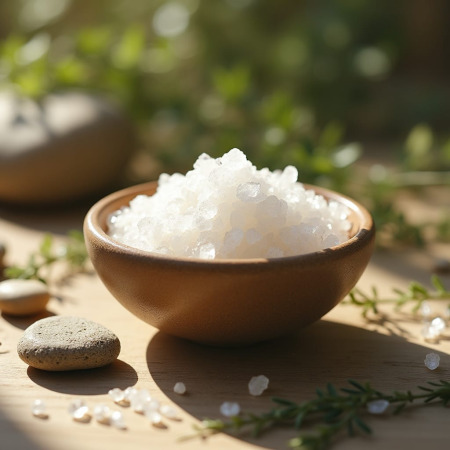
Celtic Salt: Nature’s Mineral Powerhouse for Optimal Health
Table of Contents
When you buy through links on our site, we may earn an affiliate commission at no additional cost to you (learn more)
Celtic salt—harvested from the pristine tidal waters of France’s Brittany coast—has quietly gained recognition among nutritionists and wellness practitioners for being far more than just a flavor enhancer. While refined table salt is stripped of 82+ natural minerals through processing, Celtic salt retains those trace elements in their original form. This distinction matters deeply for your body’s cellular function, electrolyte balance, and long-term vitality.
The Science Behind Celtic Salt’s Mineral Profile
What makes Celtic salt fundamentally different comes down to how it’s harvested and processed. The salt is collected using traditional methods—hand-raked from clay-lined evaporation ponds—which preserves the nutrient density that refined salt loses. When seawater evaporates naturally, minerals don’t disappear; they crystallize alongside sodium chloride.
This means Celtic salt contains approximately 2% mineral content by weight, including calcium, magnesium, potassium, zinc, iron, and iodine. Each of these plays a specific role in your physiology. Magnesium supports muscle relaxation and nervous system function. Potassium helps regulate blood pressure and heart rhythm. Calcium strengthens bones and supports muscle contraction.
Mineral
Amount (per 1 tsp)
Key Function
Magnesium
~7 mg
Muscle & nerve function
Calcium
~2 mg
Bone strength, muscle contraction
Potassium
~5 mg
Electrolyte balance, heart health
Zinc
~0.1 mg
Immune support, wound healing
Iodine
Trace amounts
Thyroid hormone production
Key Health Benefits of Celtic Salt
1. Electrolyte Balance & Hydration
Your cells communicate and function through electrolyte balance—the ratio of sodium, potassium, magnesium, and calcium inside and outside your cells. Standard table salt contains only sodium chloride, creating an imbalanced ratio when consumed regularly. Celtic salt, with its fuller mineral profile, supports proper electrolyte distribution.
This is particularly important for athletes and active individuals. When you sweat, you lose both water and electrolytes. Rehydrating with water alone dilutes your remaining electrolytes. Adding a pinch of Celtic salt helps restore the proper balance faster, supporting muscle function and recovery.
2. Blood Pressure Regulation
High sodium intake is linked to elevated blood pressure—but only when sodium’s mineral partners (especially potassium and magnesium) are absent. Research shows that when these minerals are present in the right ratio, sodium’s impact on blood pressure is neutral or even beneficial.
Celtic salt’s potassium content helps counterbalance sodium’s effects on blood vessels, allowing them to relax and blood pressure to normalize. This synergy is why Celtic salt users often report better blood pressure readings than those consuming refined salt in equal amounts.
3. Thyroid Support
Your thyroid requires iodine to produce hormones that regulate metabolism, energy, and mood. Many people became iodine-deficient once refined salt replaced sea salt—processing removes not just minerals but iodine too. Celtic salt contains naturally occurring iodine, though in trace amounts.
For optimal thyroid support, Celtic salt works best alongside other iodine sources like seaweed, fish, and eggs. If you’re considering Celtic salt as your sole iodine source, discuss supplementation with a healthcare provider based on your individual needs.
4. Improved Digestion
Stomach acid production depends on chloride ions, which trigger the release of hydrochloric acid necessary for breaking down proteins and absorbing nutrients. While both Celtic salt and table salt provide chloride, Celtic salt’s additional minerals support the overall digestive environment.
Magnesium in particular promotes healthy stomach acid production and gut motility, reducing bloating and constipation. Many people report improved digestion when switching from refined to Celtic salt—a shift reflecting the broader mineral support these trace elements provide.
5. Bone & Joint Health
Calcium and magnesium work synergistically to maintain bone density and support joint flexibility. The minerals in Celtic salt contribute to this process, particularly for individuals whose diets may be mineral-deficient. While Celtic salt shouldn’t replace dedicated calcium and magnesium intake, it complements a mineral-rich diet.
How to Use Celtic Salt Wisely
Daily Intake Guidelines
General recommendation: 1/2 teaspoon per day (roughly 2,300 mg sodium) for most adults
Active individuals: Up to 1 teaspoon daily, especially post-exercise
Those with hypertension: Consult a healthcare provider; salt restriction may still be necessary
Pregnancy & nursing: Slightly increased needs (up to 3,000 mg daily) due to expanded blood volume
Best Practices for Maximum Benefit
Use it on finished dishes. Adding Celtic salt at the end of cooking preserves more minerals than cooking with it, as heat can affect mineral bioavailability. Sprinkle it on salads, roasted vegetables, or soup after plating.
Pair it with mineral-rich foods. Celtic salt works best as part of a diet already rich in whole foods—not as a substitute for eating vegetables, nuts, and quality protein sources. The minerals in your food amplify the effects of the minerals in your salt.
Choose properly harvested Celtic salt. Look for salt labeled as “Celtic sea salt” or “sel gris” (gray salt) from Brittany, France. Avoid brands that have been heated or processed, as this removes some of the mineral content and moisture that makes Celtic salt distinctive.
Celtic Salt vs. Other Salt Types
Salt Type
Mineral Content
Best For
Celtic Sea Salt
~2% (60+ minerals)
Daily use, electrolyte balance
Himalayan Pink Salt
~1.5% (84 minerals)
Mineral diversity, aesthetics
Real Salt (Utah)
~1.5% (60+ minerals)
Similar to Celtic, alternative source
Table Salt (Refined)
~0.02% (sodium chloride only)
Not recommended long-term
Potential Considerations
Not suitable for everyone. Individuals with kidney disease, certain medications, or blood pressure medications should consult their healthcare provider before making the switch to Celtic salt. Salt intake isn’t one-size-fits-all.
Trace minerals are trace amounts. While the mineral content is superior to table salt, the quantities are still modest. Celtic salt enhances a mineral-rich diet; it doesn’t replace dedicated nutritional strategies for bone health, thyroid support, or electrolyte recovery.
Cost and availability. Celtic salt costs more than table salt due to hand-harvesting and minimal processing. Ensure you’re buying authentic sources from reputable brands to justify the investment.
The NutriGuide Pro-Tip
Make a simple “mineral water” by dissolving 1/4 teaspoon of Celtic salt in 8 ounces of filtered water. Sip this first thing in the morning before meals to support electrolyte balance, improve nutrient absorption, and give your digestion a mineral boost. The minerals activate your stomach’s acid production, preparing your gut to efficiently break down the nutrients in your breakfast. This practice is especially powerful for people following intermittent fasting or recovering from intense exercise.