Vitamin K2 Benefits For Women
Why Vitamin K2 Matters for Women’s Health
When you buy through links on our site, we may earn an affiliate commission at no additional cost to you (learn more)
Vitamin K2 is often overshadowed by its cousin K1, yet it plays a profound role in women’s wellness, particularly in bone density, cardiovascular function, and hormonal equilibrium.
Unlike K1, which your liver uses for blood clotting, K2 activates proteins that direct calcium to where it belongs: your bones and teeth, not your arteries.
The Science Behind K2 and Bone Health
Vitamin K2 activates osteocalcin, a protein that binds calcium to the bone matrix. Without adequate K2, calcium floats freely in the bloodstream instead of being incorporated into bone structure, leaving bones porous and fragile.
Research published in the American Journal of Clinical Nutrition found that women with higher K2 intake had significantly greater bone mineral density than those with lower intake.
This is especially relevant for women approaching or in menopause. As estrogen declines, bone resorption accelerates. K2 helps counterbalance this natural process by ensuring the calcium we consume actually strengthens skeletal tissue.
The mechanism is elegant: K2-dependent proteins act like construction workers, directing calcium molecules to their proper places and preventing soft-tissue calcification (where calcium deposits in arteries or joints, causing problems).
K2 and Cardiovascular Protection
Beyond bone, K2 activates matrix Gla protein (MGP), which prevents vascular calcification. Women often assume heart disease is a “male problem” — it isn’t.
Heart disease is the leading cause of death for women in the United States, and many cases involve calcified arteries. K2 helps keep arteries flexible and clear by activating the proteins that actively remove calcium from vessel walls.
Hormonal Balance and K2
Emerging research suggests K2 influences estrogen metabolism and may support hormone balance during perimenopause and menopause. The connection likely relates to K2’s role in liver function and fat-soluble vitamin absorption.
Because K2 is fat-soluble, it’s absorbed alongside dietary fats, making it easier to utilize when consumed with healthy fats like olive oil or avocado.
Top K2-Rich Foods for Women
Not all vitamin K2 sources are created equal. The most bioavailable forms come from fermented foods and animal products where bacteria naturally produce K2 (specifically MK-7, the most active form).
Fermented Foods
Natto (fermented soybeans) contains 200+ micrograms of K2 per serving — more than any other food source. Its umami flavor works beautifully in grain bowls or as a simple topping over rice.
Sauerkraut and kimchi provide meaningful K2 amounts while supporting gut health through probiotics. The fermentation process creates K2 as a metabolic byproduct of beneficial bacteria.
Tempeh offers K2 along with plant-based protein, making it ideal for women seeking diverse protein sources.
Dairy and Animal Products
Grass-fed cheese and butter are excellent K2 sources, especially when the animals graze on fresh pasture (higher K2 content).
Gouda, brie, and aged cheddar are particularly rich. Grass-fed beef and pasture-raised egg yolks contain meaningful K2, particularly the MK-4 form.
Full-fat yogurt and kefir from grass-fed sources combine K2, probiotics, and calcium for synergistic bone support.
Plant-Based Options
While fermented soy products lead, leafy greens contain small amounts of K2, though K1 predominates. Combining K1-rich greens with fat sources helps with overall K vitamin absorption.
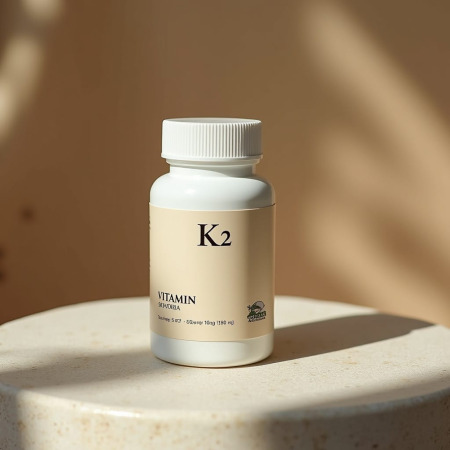
The challenge for plant-based women: obtaining sufficient K2 requires either fermented soy products or K2 supplementation. Many nutritionists recommend consulting a healthcare provider about supplementation if you avoid animal products.
Optimal Intake and Absorption
There’s no official RDA for K2 in the U.S., but European research suggests 90–100 micrograms daily for women provides meaningful benefits.
Because K2 is fat-soluble, absorption improves dramatically when consumed with dietary fat — think natto over avocado toast or cheese with olive oil.
Certain medications (antibiotics, anticoagulants) can interfere with K2 absorption or utilization. If you take warfarin or similar medications, discuss K2 intake with your doctor before making significant dietary changes.
The NutriGuide Pro-Tip
Build a “K2 ritual” around fermented foods: keep a jar of quality sauerkraut in your fridge, add natto to breakfast bowls once weekly, and choose grass-fed cheese as your go-to snack.
This modest habit compounds over time, supporting bone density and cardiovascular health without supplements or dramatic dietary shifts. Start with small amounts of fermented foods if your gut isn’t accustomed to them — introduce them gradually to allow your microbiome to adapt.