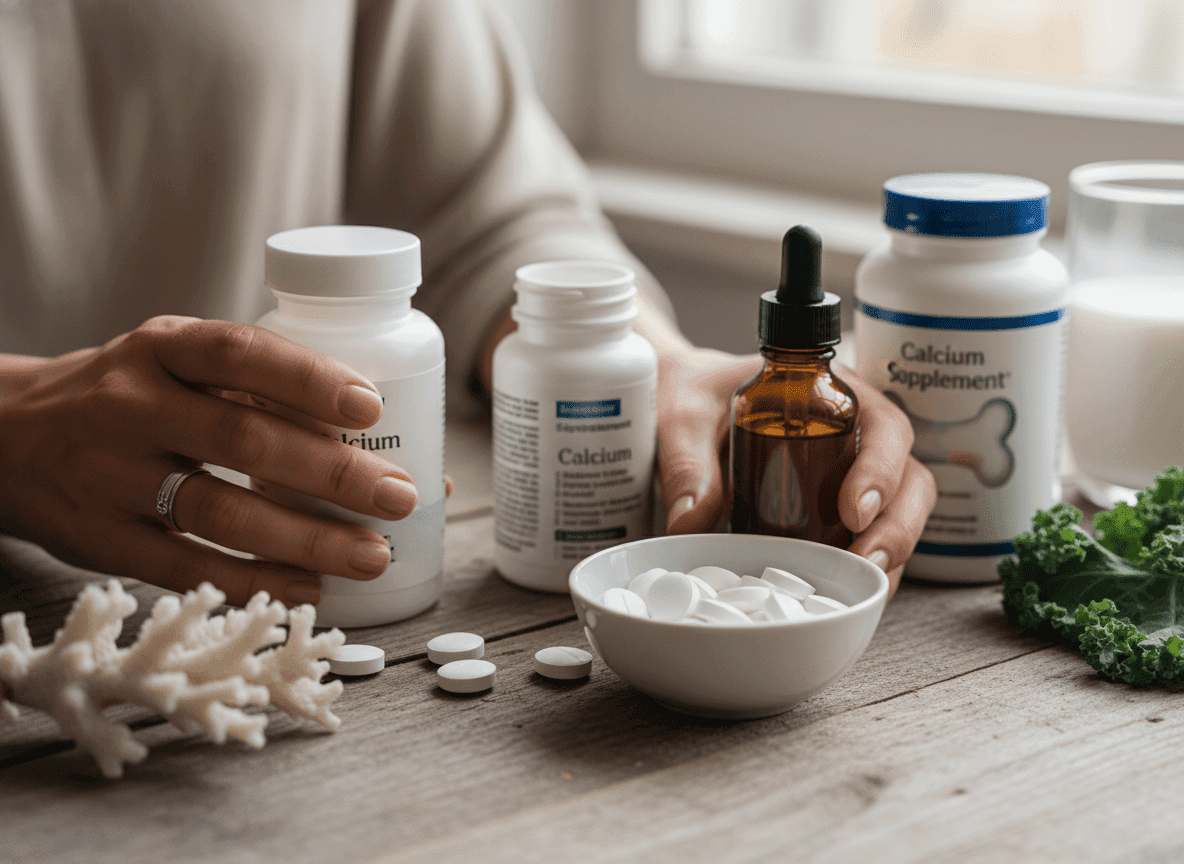
Calcium Supplements for Women: Simple Tips for Stronger Bones
Table of Contents
When you buy through links on our site, we may earn an affiliate commission at no additional cost to you (learn more)
Women often hear mixed advice about calcium supplements, especially as bone health becomes a bigger concern with age.
Daily needs can change during adulthood, pregnancy, and menopause, which makes clear guidance important.
Calcium supplements can help women meet daily calcium needs when food alone does not provide enough, especially for bone health as they age.
Strong bones support movement and reduce the risk of breaks, and calcium plays a direct role in keeping bones firm.
This topic also includes why calcium matters at different life stages and how to choose and use supplements safely.
Understanding amounts, types, and timing helps women make smart choices without overdoing it.
Why Calcium Supplements Matter for Women
Calcium plays a direct role in bone strength, muscle movement, and nerve signals.
Many women do not get enough calcium from food alone, which can affect health over time.
Supporting Bone Health
Bones store most of the body’s calcium, and they rely on a steady supply to stay strong. During daily life, bones break down and rebuild, and calcium helps this process stay balanced. When intake stays low, the body pulls calcium from bones to support the heart and muscles. Over time, this can weaken bone structure.
Supplements help fill gaps when diet falls short. Calcium also works with vitamin D to improve absorption. Without enough vitamin D, the body cannot use calcium well. Many supplements include both to support bone health.
Reducing the Risk of Osteoporosis
Osteoporosis causes bones to become thin and fragile.
Women face a higher risk than men, especially after menopause.
Estrogen levels drop during menopause, which speeds up bone loss.
Calcium supplements help slow this loss when food intake does not meet needs.
Doctors often suggest calcium for women with risk factors such as:
Family history of osteoporosis
Low body weight
Limited dairy intake
Low vitamin D levels
Regular calcium intake supports bone density over time.
While supplements do not cure osteoporosis, they help lower the risk of fractures when used as part of a healthy plan.
Life Stages with Increased Calcium Needs
Calcium needs change across a woman’s life.
Some stages require higher intake to support bone growth or reduce bone loss.
Life Stage
Why Calcium Needs Rise
Teens
Rapid bone growth
Pregnancy
Fetal bone development
Breastfeeding
Calcium loss through milk
Menopause
Faster bone breakdown
During these times, diet alone may not meet needs.
Supplements offer a practical way to reach daily targets.
Healthcare providers often help set the right dose based on age and health.
Common Signs of Calcium Deficiency
Low calcium levels do not always cause clear symptoms at first.
Mild deficiency can go unnoticed for years.
As levels drop, some women may notice:
Muscle cramps or spasms
Brittle nails
Fatigue
Tingling in fingers
Severe deficiency can affect heart rhythm and bone strength. Blood tests help confirm low levels. Supplements can restore calcium when food intake stays too low. Early action helps prevent long-term bone problems.
How to Choose and Use Calcium Supplements Safely
Choosing the right calcium supplement depends on form, dose, and daily habits. Safe use also depends on age, health needs, and how the body absorbs calcium.
Women most often see calcium carbonate and calcium citrate on labels. Calcium carbonate costs less and packs more calcium per pill. It works best when taken with food. Calcium citrate absorbs well with or without food. It suits women with low stomach acid or digestive issues. It often causes less gas or bloating. Other forms appear less often, including calcium lactate and calcium gluconate.
They contain less calcium per dose, so they require more pills.
Type
Best For
Notes
Calcium carbonate
Budget-friendly use
Take with meals
Calcium citrate
Sensitive stomachs
Flexible timing
Dosage Recommendations for Different Ages
Daily needs change with age.
Most women ages 19–50 need 1,000 mg per day from food and supplements combined.
Women over 50 usually need 1,200 mg per day.
Teen girls need more calcium during growth.
Ages 9–18 need 1,300 mg per day.
Pregnancy and breastfeeding do not raise calcium needs for most women.
Doctors suggest splitting doses.
The body absorbs about 500 mg at a time.
Larger single doses waste calcium.
Age Group
Daily Calcium Need
9–18
1,300 mg
19–50
1,000 mg
51+
1,200 mg
Potential Side Effects and Precautions
Some women notice constipation, gas, or stomach pain.
These effects often improve with lower doses or a different form.
Very high intake can cause kidney stones or interfere with iron and zinc absorption.
Women should avoid going above 2,000–2,500 mg per day, depending on age.
Certain medicines interact with calcium, including thyroid drugs and some antibiotics.
Women should space calcium and these medicines by several hours.