Juicing for Prediabetes: Evidence-Based Strategies to Manage Blood Sugar Levels
Table of Contents
When you buy through links on our site, we may earn an affiliate commission at no additional cost to you (learn more)
Prediabetes affects over 98 million American adults, and what you drink can significantly impact your blood sugar levels. Juicing has gained popularity as a health trend, but you need to approach it carefully when managing prediabetes.
The key to juicing with prediabetes is choosing low-glycemic vegetables over high-sugar fruits, controlling portion sizes, and including fiber or protein to slow glucose absorption. Many people assume all fresh juice is healthy, but fruit-heavy juices can spike your blood sugar just as quickly as soda.
You can still enjoy fresh juices while managing your prediabetes by following specific guidelines. This article will show you which ingredients work best for your blood sugar, how to prepare juices that support your health goals, and practical recipes you can start using today.
Understanding Juicing for Prediabetes
Juicing removes fiber from fruits and vegetables, which directly impacts how your body processes sugars and can lead to rapid blood glucose spikes. The practice offers convenient nutrient delivery but requires careful consideration of ingredient selection and portion control.
How Juicing Affects Blood Sugar
When you juice fruits or vegetables, you separate the liquid from the pulp and fiber. This fiber normally slows down sugar absorption in your digestive system.
Without fiber, the natural sugars in juice enter your bloodstream much faster than they would from whole produce. Your blood glucose can spike within 15-30 minutes of drinking juice, similar to consuming refined sugars.
Key differences between whole produce and juice:
Whole apple: gradual glucose release over 1-2 hours
Apple juice: rapid glucose spike within 15-30 minutes
Fiber content: whole fruit retains all fiber, juice contains minimal to none
The glycemic load of juices is typically higher than the whole foods they come from. A 12-ounce glass of orange juice can contain the sugar equivalent of 3-4 whole oranges, consumed in minutes rather than spread over time.
Benefits of Juicing for Prediabetic Individuals
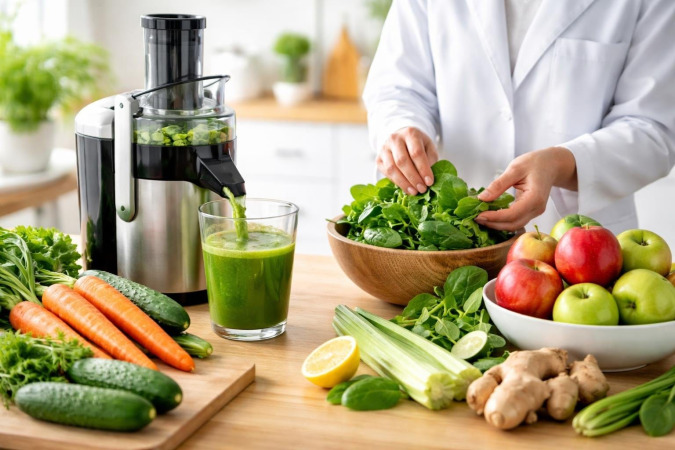
Vegetable-based juices provide concentrated vitamins, minerals, and antioxidants without significant sugar content. Green juices made from spinach, kale, cucumber, and celery deliver nutrients while minimizing blood sugar impact.
You can consume larger quantities of raw vegetables through juicing than you might eat whole. This increases your intake of anti-inflammatory compounds and phytonutrients that support metabolic health.
Adding small amounts of lemon or ginger to vegetable juices can enhance flavor without substantially raising sugar content. These additions also provide vitamin C and compounds that may support insulin sensitivity.
Potential Risks and Limitations
Fruit-heavy juices can contain 20-40 grams of sugar per 8-ounce serving, comparable to soda. This sugar load challenges your body’s insulin response and can worsen prediabetic conditions over time.
Juicing eliminates most dietary fiber, which you need for blood sugar regulation, digestive health, and satiety. Adults require 25-35 grams of fiber daily, and relying on juices makes meeting this target difficult.
Store-bought juices often contain added sugars or are made from concentrate, further increasing their glycemic impact. Even “no sugar added” varieties lack the fiber that would moderate their natural sugar content.
You may experience hunger shortly after drinking juice since liquids provide less satiety than solid foods. This can lead to overeating and additional blood sugar fluctuations throughout the day. Juice cleanses or juice-only diets can also cause nutrient imbalances and are not recommended for managing prediabetes.
Best Practices for Juicing With Prediabetes
Managing blood sugar through juicing requires careful ingredient selection and portion awareness. The key is choosing low-glycemic produce, maintaining a vegetable-heavy ratio, and consuming juices at strategic times.
Selecting Low-Glycemic Ingredients
You should prioritize vegetables and fruits that score 55 or below on the glycemic index. Leafy greens like spinach, kale, and Swiss chard have minimal impact on blood sugar and provide essential nutrients without spiking glucose levels.
Low-glycemic fruits include berries, green apples, and citrus fruits like grapefruit and lemons. These options add flavor while keeping sugar content manageable.
Best vegetable choices:
Celery
Cucumber
Zucchini
Bell peppers
Cabbage
Broccoli stems
Avoid high-glycemic options like carrots in large quantities, beets, and tropical fruits such as pineapple, mango, and watermelon. These can cause rapid blood sugar increases even in juice form.
Your juice should contain a ratio of at least 3:1 vegetables to fruit. This balance provides sweetness without overloading your system with natural sugars that behave similarly to processed sugars once extracted from their fiber.
A practical approach is using one small green apple or half a cup of berries per 16-ounce juice. The remaining ingredients should be non-starchy vegetables that add volume, nutrients, and flavor complexity.
Adding healthy fats like half an avocado or a tablespoon of chia seeds can slow glucose absorption. These additions make your juice more satiating and reduce the speed at which sugars enter your bloodstream.
Consider including protein powder or Greek yogurt to further stabilize blood sugar response. This transforms your juice into a more complete beverage that won’t cause dramatic glucose fluctuations.
Portion Control and Serving Sizes
You should limit juice servings to 8-12 ounces per sitting. Larger portions concentrate too much natural sugar, even when using primarily vegetables.
Treat juice as a supplement to whole foods rather than a meal replacement. Your body processes liquid calories differently than solid foods, leading to faster absorption and potentially higher blood sugar spikes.
Diluting your juice with water or unsweetened coconut water can extend the volume while reducing sugar concentration per ounce. This strategy allows you to enjoy a larger serving without the glycemic impact.
Timing Juices for Optimal Results
Consuming juice alongside or after a meal containing protein and fiber helps moderate blood sugar impact. Never drink juice on an empty stomach, as this creates the fastest absorption and highest glucose spike.
Morning juices work best when paired with eggs, nuts, or whole grain toast. The combination slows digestion and provides sustained energy without the crash.
Post-workout timing can be advantageous since your muscles absorb glucose more efficiently after exercise. Your insulin sensitivity improves during this window, making your body better equipped to handle natural sugars.
Avoid juicing before bed, as the sugar content can disrupt sleep and create overnight glucose elevation. Your last juice should be consumed at least 3-4 hours before sleeping.
Juicing Recipes and Lifestyle Tips
Sample Juicing Recipes for Prediabetes
Green Balance Juice combines 2 cups spinach, 1 cucumber, 1 green apple, 1/2 lemon (peeled), and a 1-inch piece of ginger. This recipe provides approximately 15 grams of carbohydrates per serving and delivers fiber, vitamins, and anti-inflammatory compounds.
Berry Vegetable Blend uses 1 cup kale, 1 medium carrot, 1/2 cup blueberries, 1/2 cup strawberries, and 1 celery stalk. The total carbohydrate content stays around 20 grams while offering antioxidants and chromium for insulin sensitivity.
Citrus Greens includes 1 cup romaine lettuce, 1 cucumber, 1/2 grapefruit (peeled), 1/2 orange (peeled), and fresh mint leaves. This combination provides vitamin C and naringenin, a flavonoid that may improve glucose metabolism.
Each recipe should yield approximately 12-16 ounces. You can reduce the fruit content by half if your blood sugar responds unfavorably to these portions.
Integrating Juices Into a Healthy Diet
Consume juices alongside protein or healthy fats to minimize blood sugar spikes. Pair your juice with a handful of almonds, a hard-boiled egg, or Greek yogurt to slow glucose absorption.
Limit juice consumption to 8-12 ounces per day, no more than once daily. Whole vegetables and fruits should remain the foundation of your diet, with juices serving as a supplement rather than a replacement.
Store fresh juice in an airtight container for no more than 24 hours. Nutrient degradation begins immediately after juicing, so consume your juice as soon as possible for maximum benefit.
Monitoring Blood Sugar While Juicing
Test your blood glucose before drinking juice and again at 1-hour and 2-hour intervals afterward. This pattern reveals how specific ingredients and portions affect your individual response.
Record your results in a log that includes the exact recipe, portion size, time of day, and any foods consumed alongside the juice.
Your target blood sugar should remain below 140 mg/dL at the 1-hour mark and return close to baseline by 2 hours. If readings exceed these levels, reduce fruit content, decrease portion size, or add more protein to your juice routine.
Adjust recipes based on your data. Some people tolerate berries better than tropical fruits, while others respond well to citrus but poorly to apples. Your glucose meter provides the objective feedback you need.