Juices That Help Fight Anemia: Natural Remedies to Boost Your Iron Levels
Table of Contents
When you buy through links on our site, we may earn an affiliate commission at no additional cost to you (learn more)
Anemia occurs when your body lacks enough healthy red blood cells to carry adequate oxygen to tissues, often resulting from iron deficiency or vitamin B12 deficiency. While medical treatment remains essential for managing anemia, certain juices can support your recovery by providing concentrated sources of iron, vitamin C, and other nutrients that enhance red blood cell production.
Freshly prepared juices from iron-rich vegetables and fruits, combined with vitamin C sources, can help boost your iron absorption and support your body’s fight against anemia. The right combination of ingredients makes a significant difference in how effectively these beverages work.
Essential Juices for Combating Anemia
Certain juices provide concentrated sources of iron, vitamin C, and other nutrients that support red blood cell production and improve iron absorption. Combining the right ingredients can significantly boost your body’s ability to combat anemia.
Iron-Rich Vegetable Juices
Spinach juice contains approximately 2.7 mg of iron per 100 grams, making it one of the most iron-dense vegetables for juicing. You can blend raw spinach with water or combine it with other vegetables to create a potent iron supplement.
Tomato juice provides both iron and lycopene, with one cup containing about 1 mg of iron. The natural acidity in tomatoes also helps your body absorb iron more efficiently.
Key iron-rich vegetables for juicing:
Spinach (2.7 mg iron per 100g)
Swiss chard (1.8 mg iron per 100g)
Parsley (6.2 mg iron per 100g)
Watercress (2.2 mg iron per 100g)
You should consume these juices fresh to maximize their nutritional value. Adding a small amount of parsley to your vegetable juice blends can significantly increase the iron content without overwhelming the flavor.
Vitamin C-Infused Fruit Juices
Your body absorbs iron more effectively when you consume it alongside vitamin C. Orange juice contains approximately 50 mg of vitamin C per 100 ml, which can triple the absorption rate of iron from plant sources.
Strawberry juice offers 60 mg of vitamin C per 100 grams and adds natural sweetness to iron-rich vegetable combinations. You can mix strawberries with spinach to create a palatable drink that addresses both iron intake and absorption.
Guava juice stands out with 228 mg of vitamin C per 100 grams. This makes it the most potent vitamin C source among common fruits. Pineapple juice provides 48 mg per 100 ml and contains bromelain, which aids digestion and nutrient absorption.
You should pair these vitamin C-rich juices with iron sources for maximum benefit.
Beetroot-Based Juices
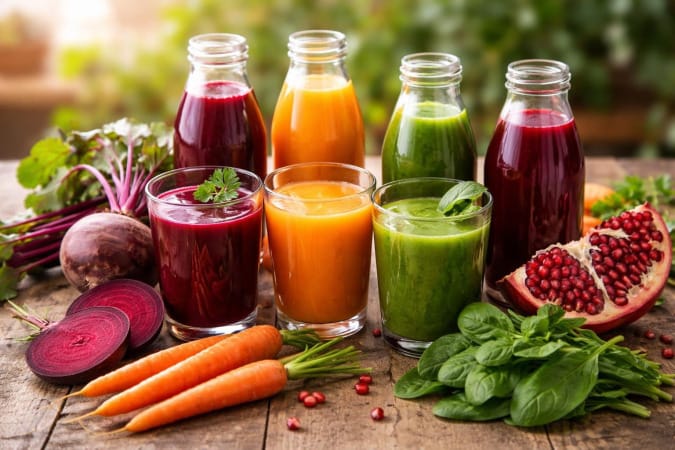
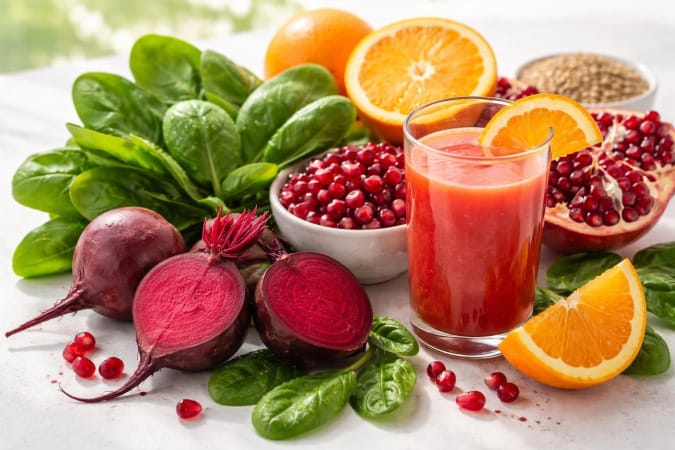
Beetroot contains 0.8 mg of iron per 100 grams and high levels of folate, which your body needs to produce healthy red blood cells. The folate content in beets reaches approximately 109 mcg per 100 grams.
Beetroot juice improves blood flow and oxygen delivery throughout your body. Studies show that drinking 200 ml of beetroot juice daily can increase hemoglobin levels within four weeks.
You can combine beetroot with carrots and apples to balance the earthy flavor while maintaining nutritional benefits. Adding lemon juice enhances both taste and iron absorption through its vitamin C content.
Raw beetroot juice may cause temporary reddening of urine or stools, which is harmless. Start with smaller amounts if you’re new to consuming beetroot juice.
Leafy Greens Juice Combinations
Kale juice provides 1.5 mg of iron per 100 grams along with vitamins A, K, and folate. You can combine kale with cucumber and celery to create a milder taste while preserving its iron content.
Effective leafy green juice combinations:
Base Ingredient
Complementary Additions
Iron Content
Kale
Apple, lemon, ginger
1.5 mg per 100g
Spinach
Cucumber, pineapple
2.7 mg per 100g
Swiss chard
Orange, carrot
1.8 mg per 100g
Collard greens offer 0.5 mg of iron per 100 grams and blend well with fruit juices to mask their bitter notes. You should rotate between different leafy greens to obtain a broader spectrum of nutrients.
Arugula adds a peppery flavor and contains 1.5 mg of iron per 100 grams. Mix it with sweeter vegetables like carrots or bell peppers to balance the strong taste while maintaining the nutritional benefits for anemia management.
How Juices Aid Anemia Management
Juices provide concentrated sources of iron and vitamin C that work together to increase hemoglobin levels. The liquid form allows for faster nutrient absorption compared to solid foods.
Enhancing Iron Absorption with Juices
Your body absorbs iron more efficiently when it’s consumed in liquid form through freshly prepared juices. The bioavailability of iron increases because juicing breaks down plant cell walls, making nutrients more accessible to your digestive system.
Non-heme iron from plant sources requires specific conditions for optimal absorption. When you drink juices containing iron-rich ingredients like spinach, beet greens, or prunes, your body processes these nutrients without the fiber that can sometimes inhibit iron uptake.
The timing of juice consumption matters for iron absorption. You should drink iron-rich juices between meals rather than with them to avoid compounds in other foods that block iron uptake. Coffee, tea, and calcium-rich foods can reduce iron absorption by up to 50% when consumed simultaneously.
Role of Vitamin C in Juices for Anemia
Vitamin C acts as an absorption enhancer that converts iron into a form your body can readily use. A single glass of juice containing 75-100 mg of vitamin C can increase iron absorption by up to 300%.
Citrus fruits provide the highest concentration of vitamin C per serving. Oranges contain approximately 70 mg per medium fruit, while grapefruits offer around 80 mg. Strawberries, kiwis, and bell peppers also deliver substantial amounts.
You need to consume vitamin C and iron together in the same meal or drink for maximum benefit. The vitamin C binds to iron molecules and keeps them soluble in your intestines, preventing them from forming compounds your body cannot absorb.
Combining Ingredients for Optimal Benefits
Strategic ingredient pairing maximizes the anti-anemia effects of your juices. Iron-rich vegetables like spinach and kale should always be combined with vitamin C sources such as oranges or strawberries.
Here are effective combinations:
Spinach + orange + carrot
Beet greens + lemon + apple
Kale + pineapple + cucumber
Prune + strawberry + ginger
Adding small amounts of copper-rich ingredients like cashew milk or sesame seeds supports iron metabolism. Folate from leafy greens works alongside iron to produce healthy red blood cells. You should include beetroot in your combinations, as it contains both iron and folate while supporting overall blood health.
Tips for Preparing and Consuming Anti-Anemia Juices
Proper preparation methods and consumption timing can significantly impact how well your body absorbs iron and other nutrients from juices. You should also be aware of certain food combinations and medical considerations that affect juice effectiveness.
Best Practices for Juice Preparation
Fresh preparation delivers the highest nutrient content for anti-anemia juices. You should consume juices within 15-20 minutes of making them to prevent oxidation and nutrient loss.
Use a slow masticating juicer rather than centrifugal models when possible. This method generates less heat and preserves more vitamin C and iron content in your juice.
Key preparation tips:
Wash all produce thoroughly to remove pesticides and contaminants
Include the peels of organic fruits like apples and pears for added nutrients
Add a squeeze of lemon or lime to enhance iron absorption through vitamin C
Avoid straining the juice completely to retain beneficial fiber and nutrients
You can prepare ingredients in advance by chopping and storing them in airtight containers for up to 24 hours. Store finished juices in dark glass containers filled to the top to minimize air exposure.
Ideal Times and Frequencies for Consumption
Drink anti-anemia juices on an empty stomach, preferably 30 minutes before meals. This timing allows for maximum absorption of iron and other nutrients without interference from other foods.
Morning consumption between 7-9 AM works best for most people. Your digestive system is most active during these hours, which improves nutrient uptake.
You should consume 8-16 ounces of iron-rich juice daily, split into one or two servings. Consistency matters more than quantity, so maintain a regular schedule rather than drinking large amounts sporadically.
Avoid consuming these juices with meals containing calcium-rich foods, as calcium inhibits iron absorption. Wait at least 2 hours between drinking your juice and consuming dairy products or calcium supplements.
Potential Interactions and Precautions
Avoid combining anti-anemia juices with:
Coffee or tea (wait 2 hours before or after)
Calcium supplements or antacids
High-fiber foods immediately before or after consumption
Certain medications interact with fruit juices. Grapefruit juice affects numerous medications including statins and blood pressure drugs, while pomegranate juice can interfere with blood thinners.
Iron overload can occur in people with hemochromatosis or thalassemia, making high-iron juices dangerous for these conditions.
Citrus-heavy juices may cause tooth enamel erosion with frequent consumption. Rinse your mouth with water after drinking or use a straw to minimize contact with teeth.
If you experience digestive discomfort, reduce your serving size and gradually increase it over several weeks. Some individuals need time to adjust to the concentrated nutrients in fresh juices.