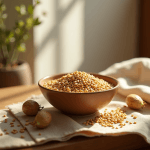
The Five-Flavor Berry That Transforms Your Stress Response
Table of Contents
When you buy through links on our site, we may earn an affiliate commission at no additional cost to you (learn more)
In the misty mountains of Northern China and Russia grows a remarkable berry that has captivated herbalists for over 2,000 years. Schisandra chinensis, known as the “five-flavor fruit,” offers a unique taste profile that encompasses all five flavors—sweet, sour, bitter, pungent, and salty. Beyond its intriguing taste, this adaptogenic berry delivers profound health benefits that modern science is only beginning to fully understand.
The Science Behind Schisandra’s Adaptogenic Power
Schisandra berries contain over 40 active compounds, with lignans being the most studied. The primary bioactive compounds—schisandrin A, schisandrin B, and schisandrol A—work synergistically to support your body’s stress response system. These lignans activate the hypothalamic-pituitary-adrenal (HPA) axis, helping regulate cortisol production and maintaining hormonal balance during challenging periods.
What makes schisandra particularly fascinating is its biphasic action. When your energy is depleted, it provides gentle stimulation without the jitters associated with caffeine. Conversely, when you’re overstimulated, it promotes calm focus and mental clarity. This intelligent adaptation occurs through its influence on neurotransmitter pathways, particularly GABA and dopamine systems.
Research published in the International Journal of Molecular Medicine demonstrates that schisandra’s antioxidant capacity exceeds many well-known superfruits. The berry’s unique ability to cross the blood-brain barrier allows these protective compounds to directly support cognitive function and neural health.
Liver Detoxification and Cellular Protection
Your liver processes everything you consume, making its health crucial for overall vitality. Schisandra berries excel at supporting hepatic function through multiple pathways. The lignans stimulate Phase I and Phase II detoxification enzymes, particularly glutathione S-transferase and UDP-glucuronosyltransferase, which help neutralize toxins and metabolic waste.
Studies show that regular schisandra consumption can significantly reduce elevated liver enzymes (ALT and AST) in individuals with compromised liver function. This hepatoprotective effect extends beyond detoxification—the berries also support liver cell regeneration and protect against oxidative damage from environmental toxins and processed foods.
The mitochondrial support provided by schisandra is equally impressive. These cellular powerhouses benefit from the berry’s ability to enhance energy production at the molecular level, leading to improved stamina and reduced fatigue throughout your day.
Cognitive Enhancement and Mental Clarity
Traditional Chinese Medicine has long recognized schisandra as a “mind-sharpening” herb, and modern research validates this wisdom. The berries enhance cognitive performance through several mechanisms, including improved cerebral blood flow and neurotransmitter optimization.
Clinical trials reveal that schisandra supplementation improves working memory, concentration, and mental processing speed. Participants consistently report enhanced focus during mentally demanding tasks, with benefits becoming more pronounced over 4-6 weeks of regular use. This cognitive boost occurs without the anxiety or sleep disruption common with stimulants.
The neuroprotective properties extend to long-term brain health. Schisandra’s antioxidant compounds help prevent age-related cognitive decline by protecting neurons from inflammatory damage and supporting healthy neurotransmitter function as we age.
Physical Performance and Recovery
Athletes and fitness enthusiasts increasingly turn to schisandra for its performance-enhancing properties. The berries improve oxygen utilization at the cellular level, leading to enhanced endurance and reduced exercise-induced fatigue. This occurs through optimized mitochondrial function and improved cardiovascular efficiency.
Recovery benefits are equally notable. Schisandra helps regulate inflammatory responses post-exercise, reducing muscle soreness and accelerating tissue repair. The adaptogenic properties help maintain training consistency by supporting your body’s ability to handle physical stress without compromising immune function.
Research indicates that athletes using schisandra demonstrate improved VO2 max and lactate threshold compared to placebo groups. These physiological improvements translate to real-world performance gains across various activities, from endurance sports to strength training.
How to Incorporate Schisandra Into Your Routine
Schisandra berries are available in several forms, each offering unique advantages. Dried whole berries provide the full spectrum of compounds but require preparation time for teas or tinctures. Powdered forms mix easily into smoothies and offer concentrated nutrition without preparation hassle.
Standardized extracts deliver consistent potency, typically containing 2-9% schisandrins. These concentrated forms are ideal for therapeutic applications and precise dosing. Liquid tinctures offer rapid absorption and easy dose adjustment, making them popular among herbalists.
For beginners, we recommend starting with 1-2 grams of dried berries daily, prepared as tea. Steep one teaspoon in hot water for 10-15 minutes, adding honey if desired to balance the complex flavor profile. Alternatively, begin with 500mg of standardized extract daily, gradually increasing based on your response.
Optimal Timing and Preparation Methods
Morning consumption maximizes schisandra’s energizing benefits without interfering with sleep. Take supplements with breakfast or prepare berry tea as part of your morning routine. The berries pair beautifully with adaptogenic herbs like rhodiola or ashwagandha for comprehensive stress support.
For cognitive benefits, consistent daily use produces the best results. Unlike stimulants that provide immediate but short-lived effects, schisandra’s benefits build gradually, creating sustainable improvements in mental clarity and focus over time.
Quality matters significantly with schisandra products. Look for organic certification and third-party testing to ensure purity and potency. Berries should be deep red-purple when dried, indicating proper harvesting and processing methods.
Safety Considerations and Interactions
Schisandra is remarkably well-tolerated by most individuals, with minimal side effects reported in clinical studies. Some people may experience mild stomach upset when taken on an empty stomach, which resolves when consumed with food. Rarely, individuals may notice increased alertness that could affect sleep if taken late in the day.
Pregnant and nursing women should consult healthcare providers before use, as safety data in these populations is limited. Individuals with autoimmune conditions should also seek professional guidance, as adaptogens can modulate immune system function.
Drug interactions are minimal but worth noting. Schisandra may enhance the effects of certain medications metabolized by liver enzymes, particularly CYP3A4 substrates. If you take prescription medications, discuss schisandra use with your healthcare provider to ensure safety.
The NutriGuide Pro-Tip
Create a “Five-Flavor Elixir” by combining 1 teaspoon of schisandra berry powder with 1 tablespoon of raw honey and a squeeze of fresh lemon juice in warm water. This preparation balances the complex taste while maximizing bioavailability. The natural sugars in honey enhance absorption of the berry’s active compounds, while lemon’s vitamin C provides additional antioxidant support. Consume this elixir 30 minutes before your morning workout for optimal energy and focus throughout your training session. The synergistic combination supports both immediate performance and long-term adaptation to physical and mental stress.