When you buy through links on our site, we may earn an affiliate commission at no additional cost to you (learn more)
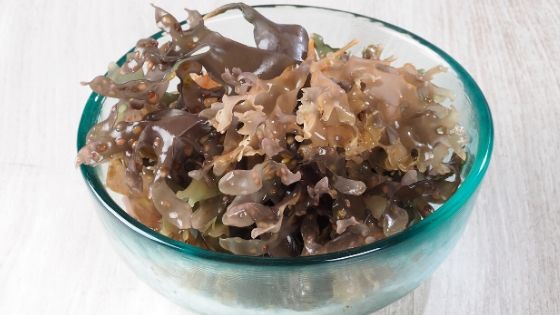
Irish sea moss (a red algae also called Chondrus crispus and commonly grouped with “sea moss”) has a long history of use in food, pharmaceuticals, and cosmetics. It contains vitamins, minerals, and a sticky plant compound called mucilage, which help explain why people apply it to skin or take it as a supplement. Studies suggest some of these components can support hydration, barrier function, and microbial balance when used appropriately.
How sea moss may help the skin
Sea moss contains nutrients linked to skin health, including sulfur, magnesium, vitamins A and K, calcium, and polysaccharides (long sugar chains). These nutrients do different things for the skin.
Sulfur is known for mild antibacterial and keratolytic effects, meaning it can help reduce some acne-causing bacteria and remove dead skin cells that clog pores. Studies suggest topical sulfur can reduce acne lesions, and sea moss contains naturally occurring sulfur that may contribute to this benefit.
Polysaccharides and mucilage in sea moss attract and hold water. This helps skin stay hydrated and feel smoother when used as a mask or in moisturizers. Hydration supports the skin barrier, which reduces dryness and irritation.
Minerals such as magnesium and calcium support normal cell function and skin repair, while vitamins (A and K in particular) play roles in skin renewal and reducing redness. These effects are modest but useful as part of a broader skincare routine.
Common topical uses
Face masks: powdered or gelled sea moss mixed with water or carrier ingredients to hydrate and soothe the skin.
Toners or serums: small amounts of sea moss extract added for moisture and mild antimicrobial support.
Spot treatments: sulfur-containing sea moss products may help reduce acne lesions when used as directed.
When used topically, many people report softer, less tight skin and a temporary reduction in redness or flaking. These observations are consistent with the moisturizing and mildly anti-inflammatory properties of seaweed-derived ingredients found in research.
What the science says (brief)
Research on whole sea moss for skin is limited, but studies on seaweed-derived compounds support several possible effects: moisture retention from polysaccharides, mild antimicrobial action from sulfur-containing compounds, and antioxidant or anti-inflammatory activity from certain algal extracts. These are reasons formulators include seaweed extracts in commercial cosmetics.
That said, high-quality clinical trials specifically using Irish sea moss on human skin are sparse. Most evidence comes from lab studies, small pilot studies, or research on similar algal extracts. Therefore, expect modest, supportive benefits rather than dramatic results.
How to use sea moss safely
Follow these practical tips to reduce risk and get useful results.
Start with a patch test: Apply a small amount of the prepared sea moss gel or product to the inside of your wrist or behind the ear and wait 24 hours for any reaction.
Use clean, simple preparations: Mix raw or powdered sea moss with distilled water or aloe vera gel to make a mask. Avoid adding many new ingredients at once if you have sensitive skin.
Limit frequency: For masks, begin with 1–2 times per week. If used in rinse-off or leave-on products, follow product directions or consult a dermatologist for acne-prone skin.
Also consider internal use carefully. Sea moss taken by mouth is a source of iodine and minerals. While small amounts can support nutrition, excessive iodine or contaminants from poorly sourced seaweed can cause thyroid or mineral imbalance. If you plan to ingest sea moss regularly, consult a healthcare professional and choose tested products.
People with a history of seafood or iodine sensitivity should be cautious, especially with oral use.
Those with very sensitive or reactive skin should do a patch test before applying to the face.
Pregnant or breastfeeding people and those with thyroid conditions should consult their provider before taking sea moss internally, due to variable iodine content.
DIY sea moss mask (simple)
Here is a low-risk, easy mask to try if you want to test sea moss for hydration and mild calming effects.
Ingredients: 2 tablespoons sea moss gel, 1 tablespoon aloe vera gel (pure), optional 1 teaspoon honey for moisturization.
Directions: Mix into a smooth paste. Apply a thin layer to clean skin and leave on for 10–15 minutes, then rinse with lukewarm water. Use 1–2 times weekly.
Do not use this mask on broken or heavily inflamed skin without professional advice.
Practical summary
Sea moss contains nutrients and polysaccharides that can help hydrate skin, support mild antimicrobial action, and provide trace nutrients useful for skin cell function. Evidence supports modest benefits, mainly from related algal extracts rather than large clinical trials on whole sea moss.
Use clean products, perform a patch test, and be cautious with internal use because of iodine and potential contaminants. For persistent acne, eczema, or other skin conditions, consult a dermatologist for tailored care.