

Probiotic Foods For A Happier, Healthier You
When you buy through links on our site, we may earn an affiliate commission at no additional cost to you (learn more)
Many people want better digestion, stronger immune systems, and improved overall health. One simple and natural way to support those goals is by adding probiotic foods to everyday meals. Probiotic foods help balance the gut by adding beneficial bacteria that support digestion and well-being.
They fit easily into most diets, offering tasty options like yogurt, kefir, and fermented vegetables. These foods don’t just aid digestion—they can also help the body absorb nutrients more efficiently and maintain good gut health.
Health Benefits of Probiotic Foods
Probiotic foods help the body in several key ways by supporting digestion, strengthening immune defenses, and influencing mood balance. Their active bacteria work within the gut to maintain healthy function and improve how the body responds to daily stress and illness.
Digestive Support
Probiotic foods such as yogurt, kefir, and fermented vegetables add helpful bacteria to the gut. These bacteria support the balance of microorganisms that help break down food and absorb nutrients more efficiently.
When a person eats probiotics regularly, it can ease symptoms of bloating, gas, and constipation. This happens because the added bacteria help restore the natural gut balance that antibiotics, illness, or poor diet can disturb.
A consistent intake of probiotics may also lower the chance of diarrhea caused by infections or medication. By keeping digestion steady, the gut stays healthier and less prone to discomfort.
| Benefit | Example Food | How It Helps |
|---|---|---|
| Easier digestion | Yogurt | Adds active bacteria that support gut health |
| Reduced bloating | Sauerkraut | Aids in breaking down complex carbohydrates |
| Better nutrient use | Kefir | Improves absorption of vitamins and minerals |
Immune System Enhancement
Much of the body’s immune response begins in the gut, where probiotics play an important role. Good bacteria can limit the growth of harmful microbes, reducing the workload on the immune system.
Probiotic foods help the body produce more antibodies, which fight infections. Studies show that people who consume them regularly may experience fewer mild respiratory or stomach illnesses.
Simple habits, such as eating a small portion of fermented food daily, can support long-term immune balance. It helps the body react faster and more effectively when it meets germs. A steady gut environment allows immune cells to communicate better and stay alert to real threats.
Mental Wellbeing Connections
The gut and brain share a close link through what scientists call the gut-brain axis. Probiotic foods influence this connection by helping to produce certain neurotransmitters, such as serotonin, which affect mood and stress levels.
When gut bacteria are in balance, people often feel less anxious or irritable. Some research suggests probiotics may ease mild symptoms of depression by improving how the body handles stress hormones.
Regular intake of probiotic foods like kimchi, miso, or yogurt may support steady energy and clearer thinking. A balanced gut environment contributes to better sleep, focus, and emotional stability through small but meaningful changes in how the body functions.
Popular Types of Probiotic Foods
Many people add probiotic foods to their diets to support digestion and gut balance. These foods range from dairy-based products to plant-based and homemade options, each offering live cultures that can help maintain healthy bacteria levels in the body.
Fermented Dairy Products
Fermented dairy foods like yogurt, kefir, and certain cheeses are well-known sources of probiotics. They provide beneficial bacteria such as Lactobacillus and Bifidobacterium, which may aid in digestion and support the body’s natural flora.
Yogurt made with live and active cultures is a convenient choice since it’s widely available and simple to include in meals. Choosing unsweetened varieties helps avoid added sugars that may interfere with gut health.
Kefir, a drinkable yogurt-like beverage, usually contains a wider range of beneficial strains. It’s slightly tangy and can be consumed on its own or blended into smoothies. Some aged cheeses, like Gouda or cheddar, also contain probiotics when made with live cultures, giving them added nutritional value.
A quick comparison:
| Product | Common Strains | Texture | Typical Serving |
|---|---|---|---|
| Yogurt | Lactobacillus bulgaricus | Creamy | 1 cup |
| Kefir | Lactobacillus kefiri | Drinkable | 1 glass |
| Cheese (aged) | Bifidobacterium bifidum | Firm | 1–2 oz |
Plant-Based Probiotic Foods
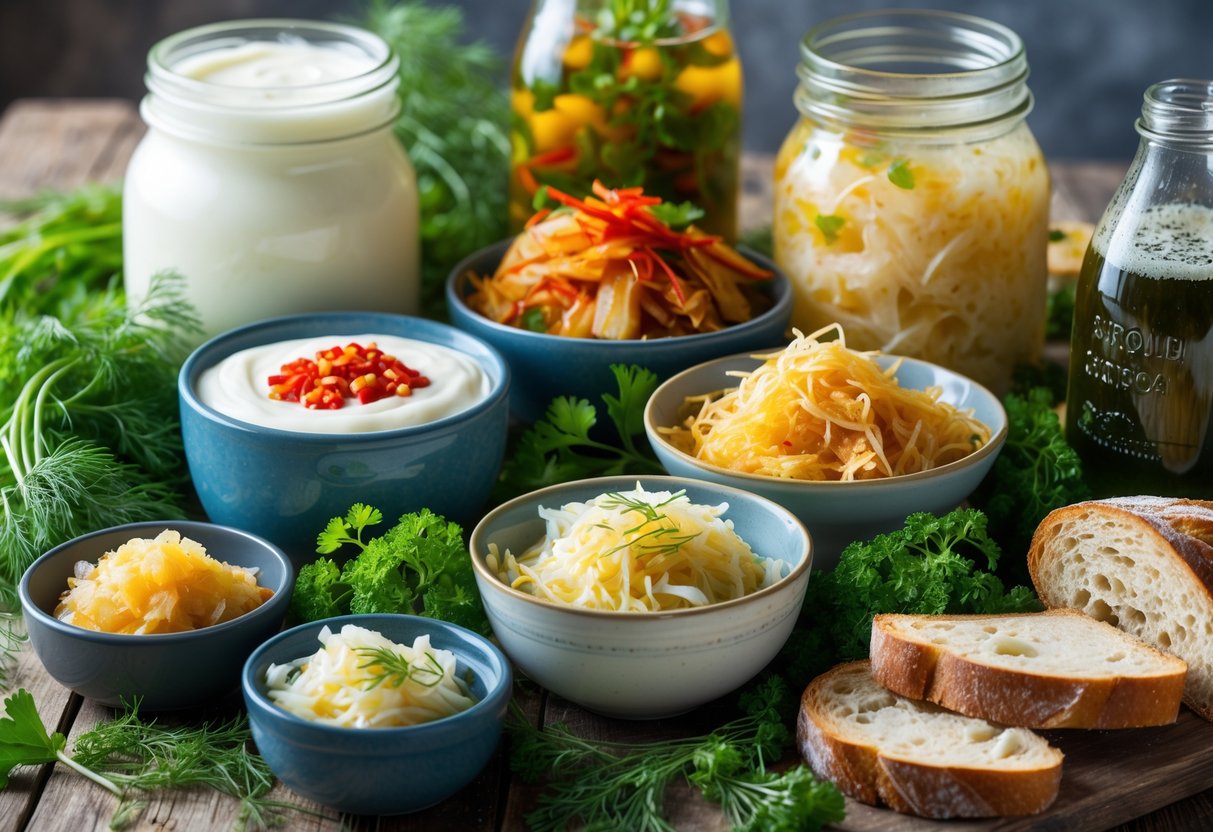
Plant-based probiotics come from fermented vegetables, grains, or teas. They are a good option for people who avoid dairy. Sauerkraut and kimchi are two popular choices made from cabbage and other vegetables fermented with salt and naturally occurring bacteria.
These foods add both probiotics and fiber, which together support a healthy gut. Regularly eating small portions can help increase beneficial bacteria in the intestines. The fermentation process also enhances flavor, giving the foods a tangy taste that pairs well with many dishes.
Other examples include miso, a paste made from fermented soybeans, and tempeh, a firm soy product often used as a meat substitute. Kombucha, a fizzy tea fermented with yeast and bacteria, provides an easy way to enjoy probiotics in drink form.
A short list of popular non-dairy sources:
- Sauerkraut
- Kimchi
- Tempeh
- Miso
- Kombucha
Homemade Fermented Foods
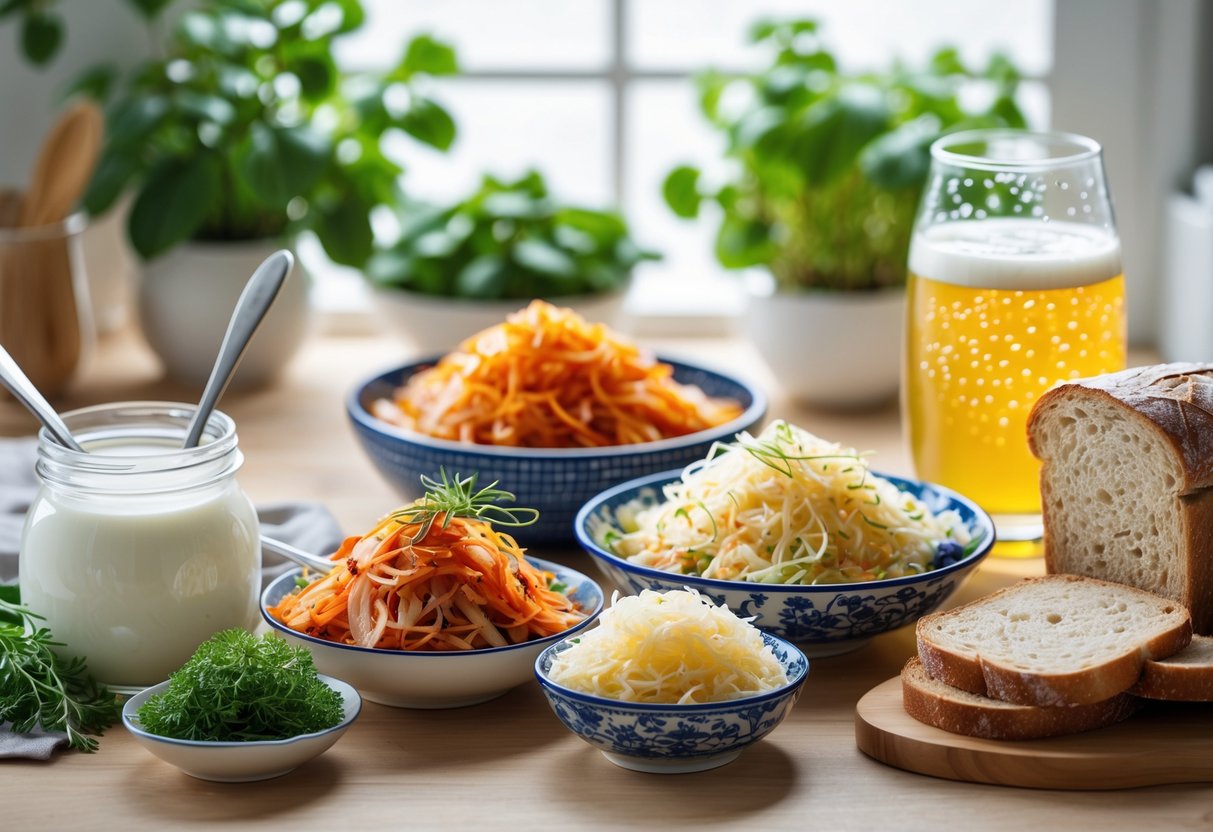
Making fermented foods at home allows people to control ingredients and taste. Simple recipes often need only vegetables, salt, and clean jars. Common examples are homemade pickles, fermented carrots, and yogurt prepared from starter cultures.
Clean equipment and proper storage are important since harmful bacteria can grow if conditions aren’t right. Using filtered water and sea salt helps maintain the correct balance for fermentation.
Homemade versions often have stronger flavors than store-bought ones and can be adjusted for time, spice, and texture. Many people enjoy experimenting with small batches to find their preferred level of sourness or crunch.


